One subject, roughly facing the camera, eyes visible: that is the photo that works. Daylight helps, and it does not need to be sharp; most of what we work from is a phone photo of a dog on a sofa. Upload a JPEG, PNG or HEIC. A subject facing away, or three dogs in one round, will not draw well.
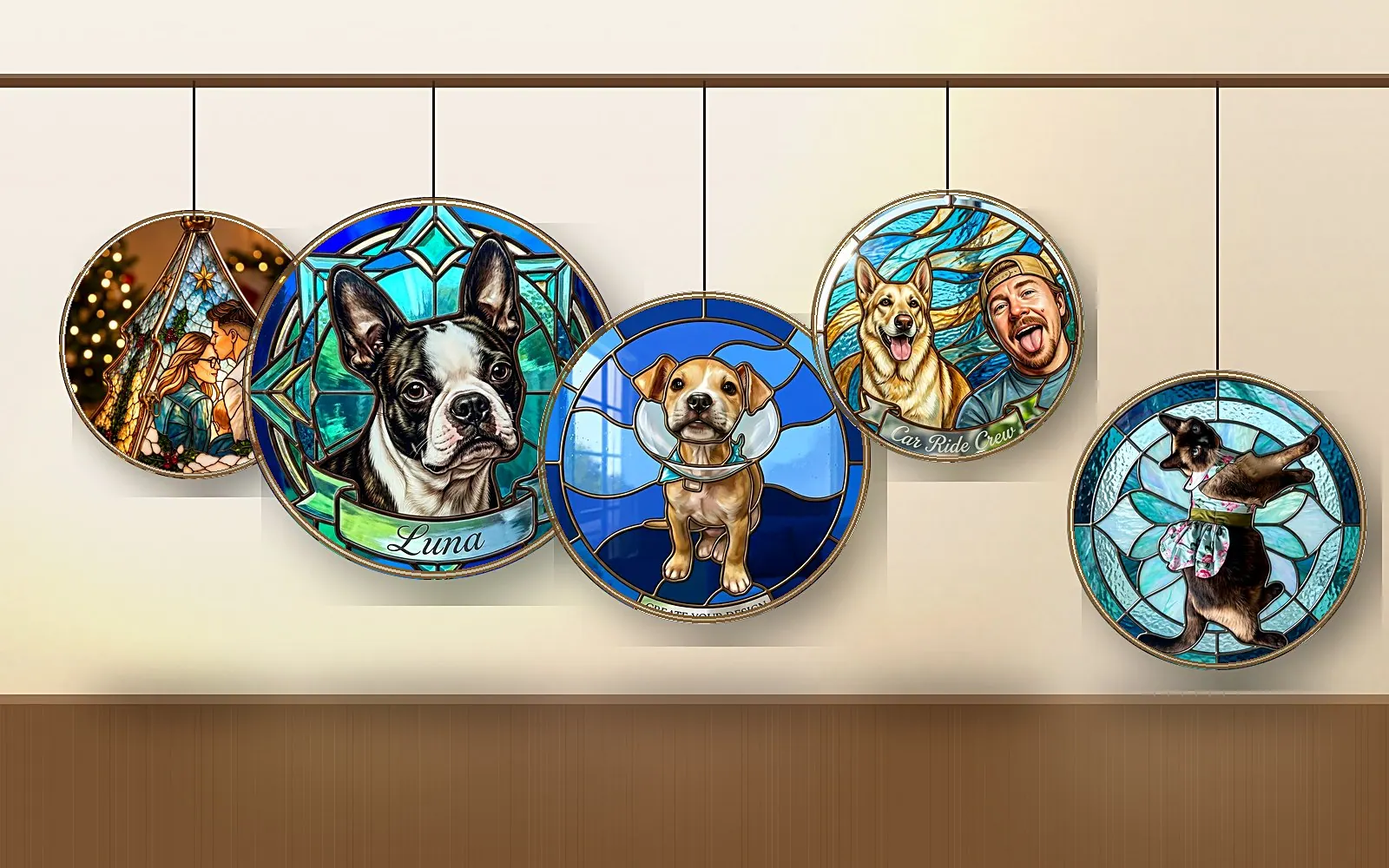
What does a good photo have?
One subject, roughly facing the camera, with their eyes visible. The design is drawn from the face, and the eyes most of all, so a photo where you can see both eyes gives the drawing what it needs.
- One subject in the frame: one dog, one cat, one person.
- Facing the camera, or near enough: a three-quarter view is fine; the back of a head is not.
- Both eyes visible, not hidden by fur, a hat or a toy.
- Daylight if you can: a window or the garden rather than a lamp at night.
- Ears and chin both inside the frame, with a margin of sofa or garden around them.
It does not need to be sharp, posed or recent. Most of what we work from is a phone photo of a dog on a sofa, and the eyebrows still come out right, which is the bit nobody ever gets right. One buyer sent what she called a fairly rubbish phone photo of her dog on the sofa and was surprised that we got his eyebrows; that is the usual story.
What will not work?
A subject facing away, and three dogs at once in one round. The first gives the drawing no face to work from; the second leaves each face too small in the glass to carry its own lead lines.
For two pets, a photo of them together can work if both faces are clear and roughly the same size; for three, make a piece each, and the sizing guide matches each to its window. A face in deep shadow, a face half out of frame, or a photo taken from directly above all tend to come back as something less than the animal. When that happens, run it again with another photo; it stays free until you approve a design.
Does it need to be a professional photo?
No. A phone photo is what we work from nearly every time. The file can be a JPEG, a PNG or a HEIC straight from the phone.
The drawing reads the shape of the face, the set of the ears, the markings and the eyes; it does not need every hair. What it cannot invent is what the photo does not show, so a clear view of the face matters more than resolution. If you only have an old photo of a pet you have lost, send it; it does not need to be sharp, and if the drawing does not catch them, one of us will draw it by hand instead and be in touch the same day. The gifting guide says more about memorial pieces.
Can I add a name, a background or a different colour?
Yes. On the create page you can add a name or text of up to 20 characters, describe a background or a style for an optional AI touch, and for the suncatcher pick a background tone or leave it on Auto.
The AI touch is a short line of words beside the photo: a sunset behind him, or ivy through the border. It changes the background and the mood, not the face. The tone changes the glass colours of the background; the tone guide goes through them. If you have no photo at all, the Describe tab lets you say what you want drawn instead, a beagle wearing Santa clothes, say, and the design is drawn from the words. All of it is free until you approve, on the create page.
What happens to my photo?
Its one job is to be the thing we draw and check your piece from. We do not resell it, publish it or train anything on it, and when the order closes it is deleted.
Your photograph is yours. One of us checks the drawn design against it before we cut; after that it has no further use to us. Nothing you upload appears on this site.
Questions this leaves
Can I upload a photo of a person rather than a pet?
Yes. The create page asks for a photo of your pet or your family, and the same rules apply: one subject, facing the camera, eyes visible. Portraits of people are drawn the same way and cut from the same glass.
What if the design that comes back does not look like them?
Change the words, the tone or the photo and run it again, as many times as you like; it stays free until you approve one. If it is still not there, say so in the box and one of us will draw it by hand instead, and we will be in touch the same day.
How long does the drawing take?
About a minute for a suncatcher. The screen walks through the stages as it goes: reading the photo, drawing the lead lines, choosing the glass, letting the light through, hanging it on the wall.

